 Image 1 of 3
 Image 2 of 3
 Image 3 of 3
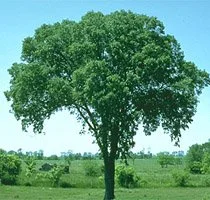
American Elm (Ulmus americana) is a large deciduous tree and are a natural component of many types of natural forests. They are native to the Eastern portion of Northern Hemisphere. The are a can live for several hundred years, and can grow to over 100’ tall. It is a very hardy species which can resist very cold temperatures. Widely planted in residential neighborhoods. These statuesque trees grow naturally from Nova Scotia to Florida, and west to Texas and into the Rockies, although they grow the largest and hardiest in the North Eastern US. This is the State Tree of Massachusetts, and North Dakota.
Starting in the 1920, the introduction of invasive Elm Bark Beetles to North America, lead to the spread of Dutch Elm Disease which has destroyed a vast number of native elms, although some pockets have held out. With determination, scientists and foresters have worked to develop disease resistant varieties.
We are offering a blight resistant variety, which retains the classic vase-shaped canopy and graceful arching branches that once lined countless American streets, while offering improved tolerance to Dutch elm disease. It is a fast-growing, adaptable shade tree suited to a wide range of sites. It blooms very early in spring, before its leaves emerge, and grows best in full sun to part shade with moist, well-drained soil, although it also thrives on hillsides, uplands and other well-drained soils
American Elm (Ulmus americana) is a large deciduous tree and are a natural component of many types of natural forests. They are native to the Eastern portion of Northern Hemisphere. The are a can live for several hundred years, and can grow to over 100’ tall. It is a very hardy species which can resist very cold temperatures. Widely planted in residential neighborhoods. These statuesque trees grow naturally from Nova Scotia to Florida, and west to Texas and into the Rockies, although they grow the largest and hardiest in the North Eastern US. This is the State Tree of Massachusetts, and North Dakota.
Starting in the 1920, the introduction of invasive Elm Bark Beetles to North America, lead to the spread of Dutch Elm Disease which has destroyed a vast number of native elms, although some pockets have held out. With determination, scientists and foresters have worked to develop disease resistant varieties.
We are offering a blight resistant variety, which retains the classic vase-shaped canopy and graceful arching branches that once lined countless American streets, while offering improved tolerance to Dutch elm disease. It is a fast-growing, adaptable shade tree suited to a wide range of sites. It blooms very early in spring, before its leaves emerge, and grows best in full sun to part shade with moist, well-drained soil, although it also thrives on hillsides, uplands and other well-drained soils