 Image 1 of 4
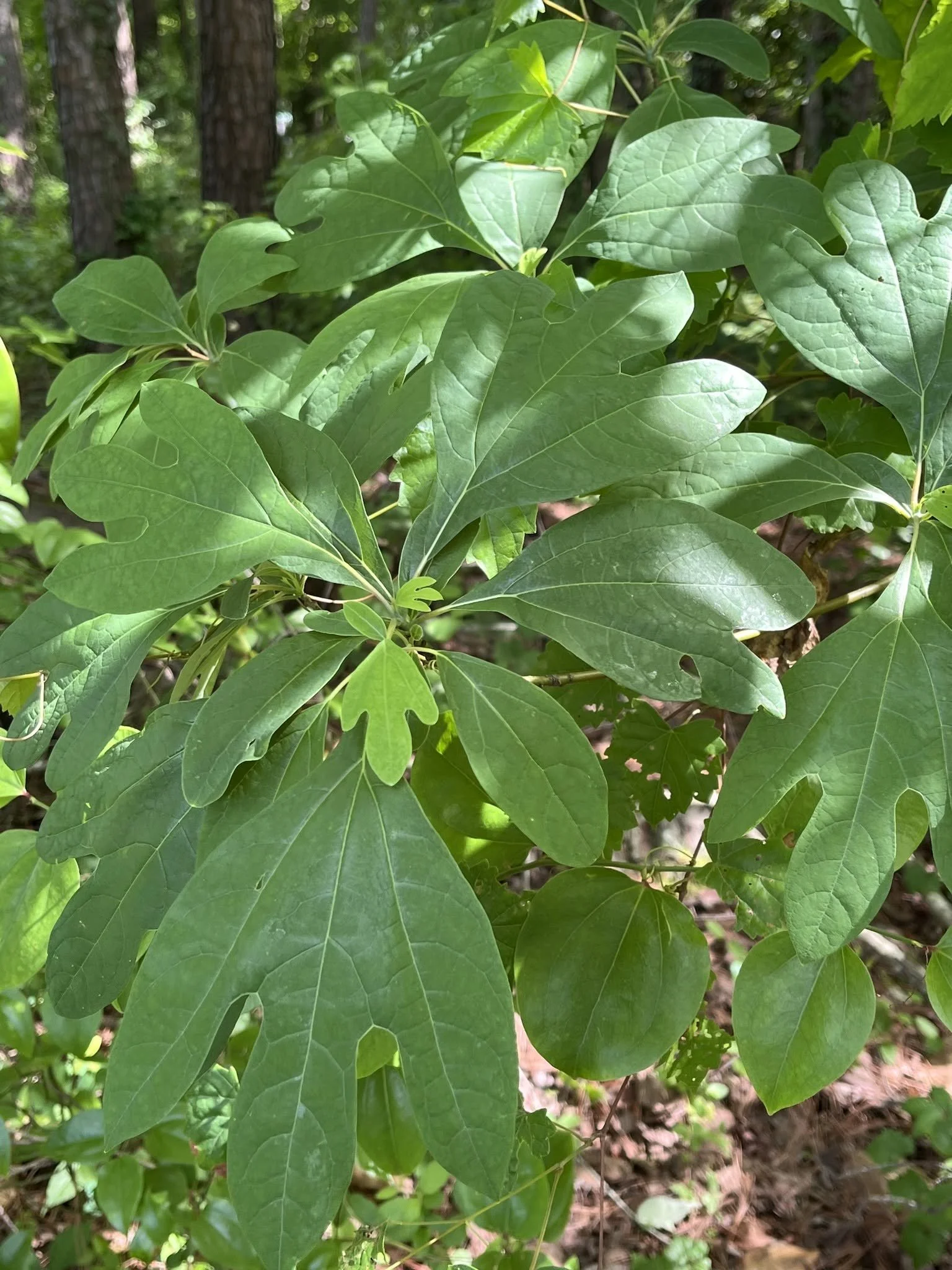 Image 2 of 4
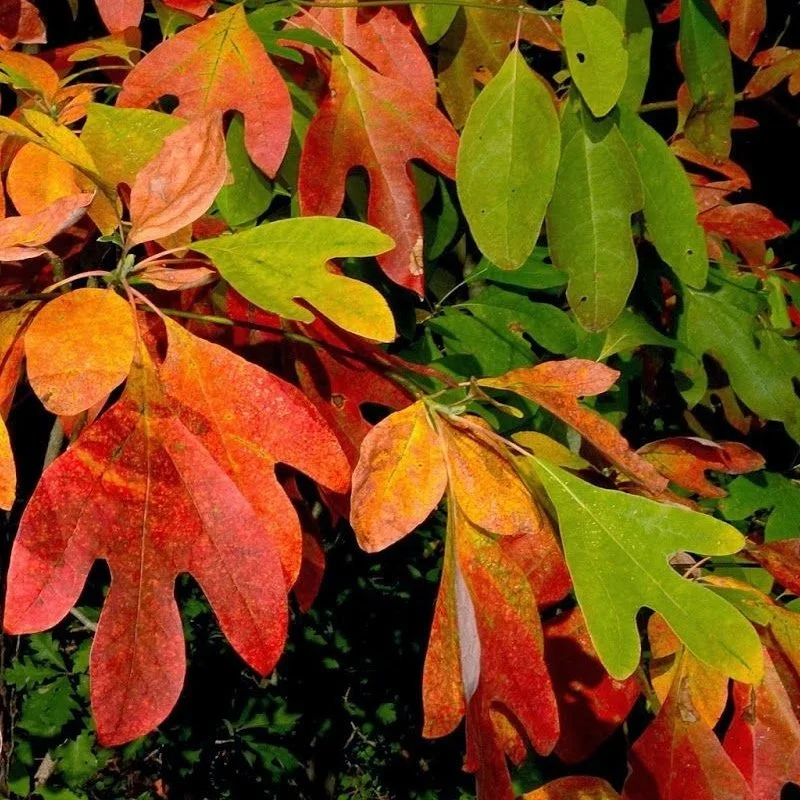 Image 3 of 4
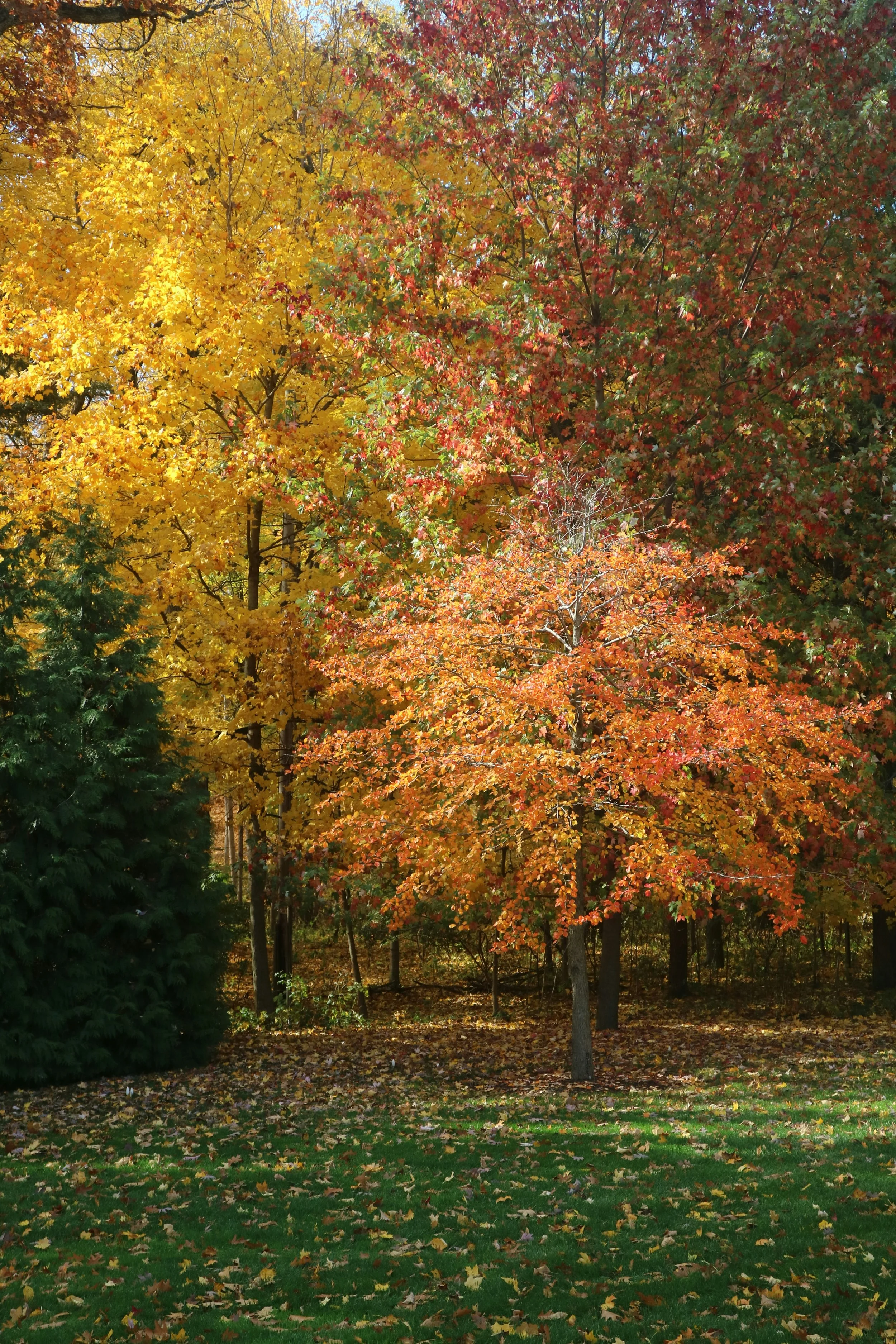 Image 4 of 4
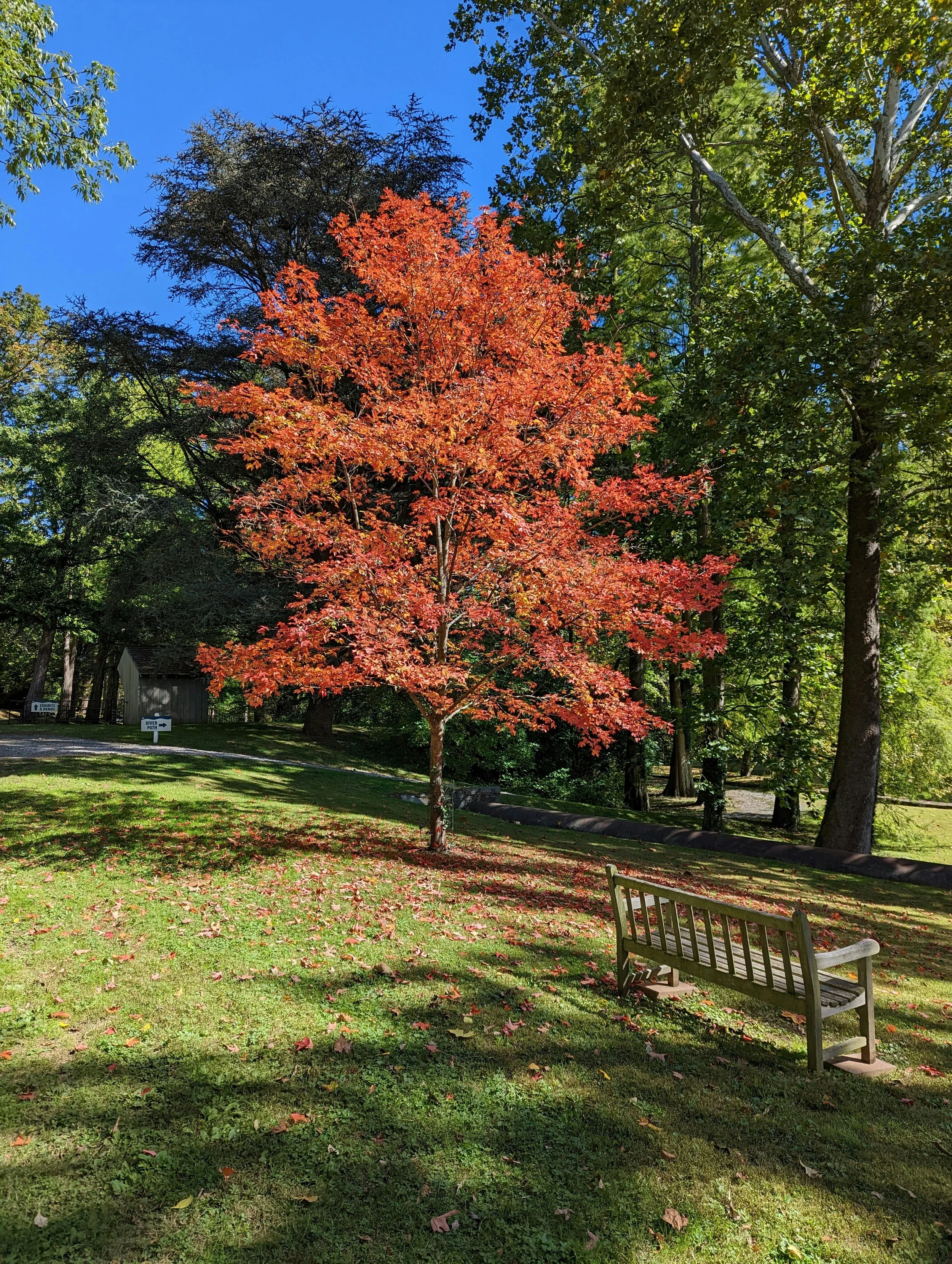
Sassafras (Sassafras albidum) is a native tree easily recognized by its distinctively shaped leaves, which can be oval, mitten-shaped, or three-lobed even on the same branch. It offers outstanding orange, red, and purple fall color and aromatic bark, twigs, and roots. It blooms in mid-spring, before its leaves emerge, and grows best in full sun to part shade with moderate to dry, well-drained soil. Very easy to grow it’s a great addition to any yard or garden. It is highly regarded for restoring depleted soils in old fields, has a deep taproot and is highly drought tolerant once established.
It is often grown as an ornamental tree, known for the unusual leaves and aromatic scent. They have a distinctive orange-brown bark or yellow bark. Sassafras roots do send up shoots that can turn a single tree into a small thicket over time if not pruned but is not considered invasive and can be easily controlled and grown into a singular tree or small cluster. A singular tree will typically grow 30-60’ tall (sometimes up to 100’ or more), with a dense pyramidal shape. In fall its foliage turns brilliant orange, gold, crimson, and purple. In winter the tiered layers of horizontal branches, and sympodial shape provide an attractive and interesting shape for the winter garden effect. It is known to grow in full or part sun, but in New England is often found growing wild in deep shade as well.
Native ranges from southern Maine, west to Iowa, and south to central Florida. Acts as a larval host for swallowtail butterflies and provides fruit for many species local birds and small mammals. Native ranges from southern Maine, west to Iowa, and south to central Florida.
Native American tribes used the leaves of sassafras to treat wounds by rubbing the leaves directly into a wound and used different parts of the plant for many medicinal purposes.
Sassafras (Sassafras albidum) is a native tree easily recognized by its distinctively shaped leaves, which can be oval, mitten-shaped, or three-lobed even on the same branch. It offers outstanding orange, red, and purple fall color and aromatic bark, twigs, and roots. It blooms in mid-spring, before its leaves emerge, and grows best in full sun to part shade with moderate to dry, well-drained soil. Very easy to grow it’s a great addition to any yard or garden. It is highly regarded for restoring depleted soils in old fields, has a deep taproot and is highly drought tolerant once established.
It is often grown as an ornamental tree, known for the unusual leaves and aromatic scent. They have a distinctive orange-brown bark or yellow bark. Sassafras roots do send up shoots that can turn a single tree into a small thicket over time if not pruned but is not considered invasive and can be easily controlled and grown into a singular tree or small cluster. A singular tree will typically grow 30-60’ tall (sometimes up to 100’ or more), with a dense pyramidal shape. In fall its foliage turns brilliant orange, gold, crimson, and purple. In winter the tiered layers of horizontal branches, and sympodial shape provide an attractive and interesting shape for the winter garden effect. It is known to grow in full or part sun, but in New England is often found growing wild in deep shade as well.
Native ranges from southern Maine, west to Iowa, and south to central Florida. Acts as a larval host for swallowtail butterflies and provides fruit for many species local birds and small mammals. Native ranges from southern Maine, west to Iowa, and south to central Florida.
Native American tribes used the leaves of sassafras to treat wounds by rubbing the leaves directly into a wound and used different parts of the plant for many medicinal purposes.